GOVERNANCE
Documents and Reporting for Government and Public Use
Long Term Control Plan
The Paducah McCracken Joint Sewer Agency (JSA) has entered into a Consent Judgment with the Commonwealth of Kentucky and has received an Administrative Order from the Environmental Protection Agency (EPA). The Judgment was entered into Franklin Circuit Court in September of 2007. While JSA continues to work toward completion of requirements from the Consent Judgment, the EPA released JSA from the Administrative Order in 2016.
What this means:
The Consent Judgment requires JSA to address sanitary sewer overflows (SSOs) and discharges from combined sewer overflow outfalls (CSO outfalls). This is very common in the sanitary sewer industry.
It also requires that JSA develop, submit for approval, and implement plans for the continued improvement of the sewage collection and treatment system.
JSA is one of seventeen communities in Kentucky with permitted CSO outfalls. Each of these communities, including Frankfort, Henderson, Louisville, the Northern Kentucky Sanitation District #1, and Owensboro, are under similar consent judgments.
There are up to 100 additional communities in Kentucky that the state is considering additional action to address SSOs.
What is being done:
JSA has prepared and submitted plans related to work to mitigate the effect of sanitary and combined sewer overflows. Work toward this goal has been ongoing since 2008. JSA also continues to perform maintenance and rehabilitation throughout its collection system. Since 2008, JSA has performed over $70 million dollars worth of work to expand and increase capacity of the system, reduce the amounts and the effects of combined sewer and sanitary sewer overflows, rehabilitate the collection system and repair and upgrade the treatment plants that serve the system. JSA still needs to perform over $80 million of capital work from now to 2038 to comply with the requirements of EPA and Kentucky Division of Water.
Downloads
Audits
The fiscal year for JSA is from July 1 to June 30. Every fiscal year, an audit is performed by an outside entity and provided to the JSA Board of Directors.
Open Records
JSA is subject to the Kentucky Open Records Act (KRS 61.870-61.884) and certain requirements with regard to records retention.
BEFORE YOU DIG
The JSA performs location services for excavations within our service area. If you wish to excavate in our area, you may call our office at (270) 575-0056. You will be directed to submit your utility location request via email at jsabud@jointsewer.com. Kentucky’s BUD requirements related to excavation notification and marking can be found within the Kentucky Revised Statutes (KRS) at KRS 367.4905 through KRS 367.4917.
Combined Sewer Overflow History
WHAT ARE COMBINED SEWER OVERFLOWS?
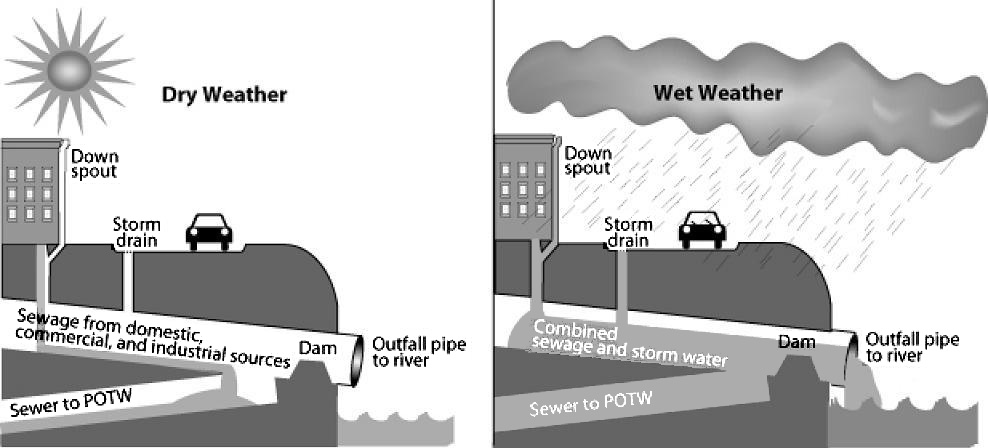
The combined sewer system is designed to collect storm water runoff and sanitary sewage in the same pipe. These types of pipes were first constructed when treatment plants did not exist. They piped the flows directly to the river. This “one pipe” methodology was intended to save money. When treatment plants were constructed, these lines were not separated into individual storm and sanitary lines. Instead, these lines remained in service with check dams and regulators to turn dry day flows to the treatment plant. During storm events, flow in the combined sewer may exceed the treatment plant’s capacity. When this occurs, combined sewers are designed to overflow, resulting in the discharge of diluted but untreated wastewater into the area’s streams and rivers. These discharges are referred to as combined sewer overflows (CSOs).
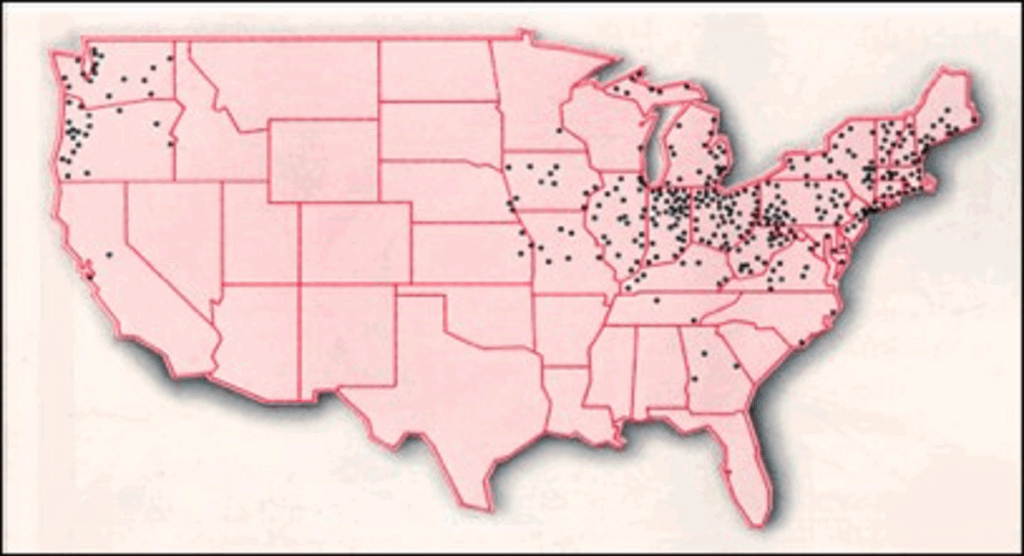
Combined sewer systems are found in many older cities in the U.S. and were considered state of the art technology during the late 19th and early 20th centuries, they are common in most major cities in the Ease and Midwest. According to the latest EPA estimates, there are approximately 772 communities in the United States with combined sewers.
HOW MANY DOES PADUCAH HAVE?
Paducah has almost 56 miles of combined sewers in the city, principally in the midtown area and the surrounding neighborhoods. Paducah’s combined sewer system previously consisted of 14 permitted overflows. Three of these have already been abated. Eleven overflows now exist at various points within the combined sewer system.
HISTORY OF THE CSO’S AND WASTEWATER SYSTEM
The earliest sewers in Paducah were constructed in downtown Paducah during the mid 1890’s. These sewers were primarily separate sanitary and storm sewers. The construction of combined sewers began in areas west of 12th Street in the early 1900’s. Designers during this era held the philosophy that combined sewers were more cost effective than separate storm and sanitary sewers. One storm and sanitary piping system could serve both purposes. The construction was financed through a General Obligation Bond issue.
Large relief sewers were constructed in the late 1950’s and throughout the 1960’s to relieve basement flooding and related problems within the combined sewer system. Construction of these relief sewers created the majority of the overflow points within the combined sewer system.
Construction of the original treatment plant and major pumping stations was completed in 1957. The treatment plant was upgraded in 1974 to include secondary wastewater treatment facilities. The secondary facilities greatly increased the quality of treatment achieved at the facility.
The wastewater treatment plant was upgraded again in 1989 to add additional capacity to enable treatment of flow from S.D. #2 (Lone Oak) as well as improve the overall treatment process.
JSA was created in 1999, and in 2009, the Paducah wastewater treatment plant’s wet weather capacity was increased from 9 million gallons per day, to 17 million gallons per day.
JSA CONSENT JUDGMENT
The federal government passed the Clean Water Act in 1994. This act required all communities to plan and implement a strategy for the control of CSOs. The act also made SSOs illegal. Unfortunately, technology did not substantially exist for the control of CSOs in 1994, and the financial burden of implementing strategies for the control of CSOs (as well as sanitary sewer overflows (SSOs)) is extremely high. The Environmental Protection Agency (EPA) began a process of entering into legal agreements with sanitary sewer cities and utilities outlining timelines and requirements for control of CSOs. The JSA entered into a Consent Judgment in September of 2007 with the Kentucky Division of Water (KY DOW). The Consent Judgment allowed JSA eight years to eliminate SSOs during certain rain events. The Judgment did not specify a timeframe on mitigation of CSOs. Per the Judgment, the Long-Term Control Plan (LTCP), a document addressing CSOs, would define the timeframe. In December of 2007, the EPA filed an Administrative Order requiring JSA to perform all mitigation actions within a ten-year timeframe. Billing inserts were mailed to customers in 2008, 2010 and 2012 explaining actions to customers related to the Consent Judgment. JSA also advertised and held public meetings to solicit public comments related to this issue during that timeframe.
Several other cities, including Owensboro, Henderson, Covington, Lexington, Maysville, Ashland, Frankfort, Winchester and Louisville have entered into Consent Judgments with KY Division of Water or EPA related to CSOs or SSOs. The EPA or local state jurisdiction has entered into Consent Judgments with approximately all of the estimated 772 CSO communities.
LONG TERM CONTROL PLAN
JSA was to submit the LTCP to KY DOW by September 5, 2010. The purpose of the LTCP is to bring all CSO discharge points in compliance with the Clean Water Act, minimize the impacts of CSOs on water quality, aquatic biota, and human health, and bring stakeholders into the planning, prioritization and selection of projects.
The LTCP was to be preceded by the Interim LTCP, which documents progress and activities related to the LTCP. The Interim LTCP was required to be submitted by March 5, 2009. JSA submitted the Interim LTCP on September 22, 2008. After one round of comment resolution, the Interim LTCP was approved on April 7, 2010.
The LTCP was submitted to KY DOW and EPA on September 2, 2010.
The LTCP called for primarily screening the flows at the outfalls. JSA changed that plan to perform sewer separation at Bridge Street and Wallace Park (which has been completed).
There was no activity related to the review or approval of the LTCP until 2012, when comments were received and returned. Another no activity period occurred until 2014, when JSA was asked to revise the LTCP. JSA agreed, based on having a series of meetings with EPA/KY DOW to discuss JSA’s special issues facing it. They are:
- Large amount of flows to deal with, flows rival other utilities with much larger financial capabilities – flows = 1.8 billion gallons per year
- Challenges with terrain and floodwall
- Financial situation with customers compared to capital plan cost
During these meetings, JSA discovered that EPA does not like screening only, which was the original proposal. Over the series of meetings, EPA/KY DOW gained a more thorough understanding of JSA’s restrictions and discussions occur related to strategy for the mitigation of combined sewers, which is 85% capture of rain events. JSA formulates a revised plan and submits October 9, 2015.
Planning level costs for the plan amount to $102M. Planning level costs are what construction might cost over the nation. All costs for JSA’s plan are planning level costs, with the exception of separation. Separation is very costly. For Paducah, if we chose separation, the costs would be $302 million, with this cost based on local experience.
KY DOW approved JSA’s LTCP on October 10, 2016. EPA closed the Administrative Order related to the LTCP on October 19, 2016.
JSA negotiated a 22-year schedule for implementation of the LTCP. Construction activities are to be completed in 2038.